

Chiluverichethankumar
1 month ago
📁 React Native Project Structure That Scales (2026)
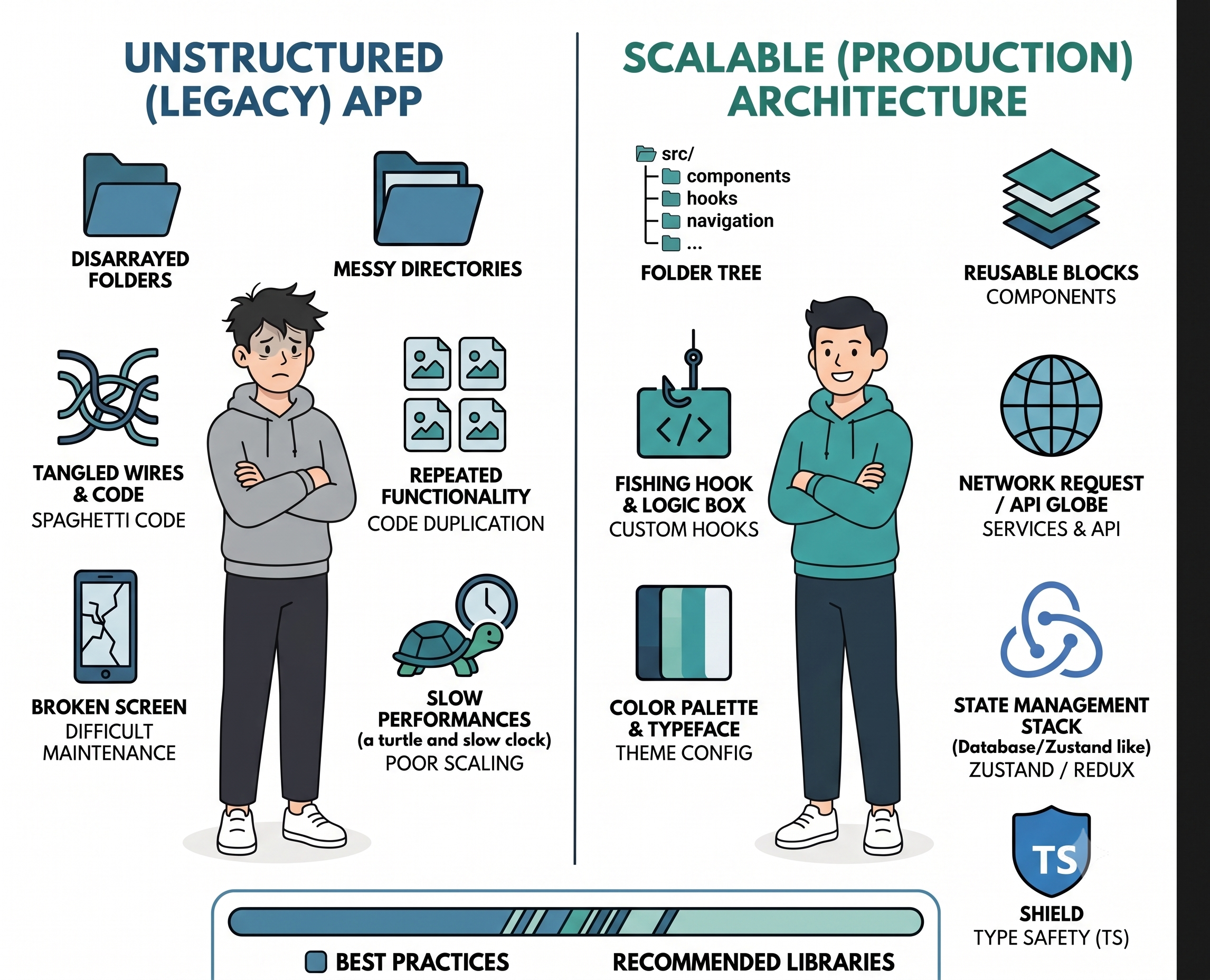
As your React Native app grows, having a clean project structure becomes just as important as writing good code.
A well-organized architecture makes your app easier to maintain, debug, and scale with a team.
Here’s a production-ready structure that works well for most projects:
src/
├── assets/
├── components/
├── hooks/
├── navigation/
├── modules/
├── screens/
├── services/
├── api/
├── utils/
├── constants/
├── theme/
├── types/
├── store/
└── context/
✅ Best Practices
• Keep UI components reusable.
• Separate business logic from UI.
• Create custom hooks for reusable functionality.
• Store API calls in a dedicated services/api folder.
• Use TypeScript for better type safety.
• Centralize colors, spacing, and typography in a theme folder.
• Avoid duplicate code by creating shared components.
• Organize features into modules instead of placing everything inside screens.
Recommended Libraries
🚀 Expo or React Native CLI
🧭 Expo Router / React Navigation
🌐 Axios or React Query
📦 Zustand / Redux Toolkit
🗄️ MMKV or AsyncStorage
🎨 NativeWind / React Native Paper / Tamagui
📋 React Hook Form + Zod
Discussion 💬
How do you organize your React Native projects?
Share your folder structure, GitHub repository, or architecture ideas below. Let’s learn from each other!
1
Join Conversation
React Native
A community for React Native developers to learn, build, and scale mobile applications.
Discuss:
• React Native fundamentals
• Expo & Native CLI
• Android & iOS development
• UI/UX design systems
• APIs & backend integration
• Firebase & Supabase
• AI integrations
• Performance optimization
• State management
• Authentication systems
• Real-world app architecture
• Debugging & deployment
Perfect for beginners, students, and advanced mobile engineers building production-ready apps.
Show more
May 18, 2026
Public
7
Members
1
Moderators